1989 · Arcade & Origins
Strider
Capcom · Platform · Arcade
Overview
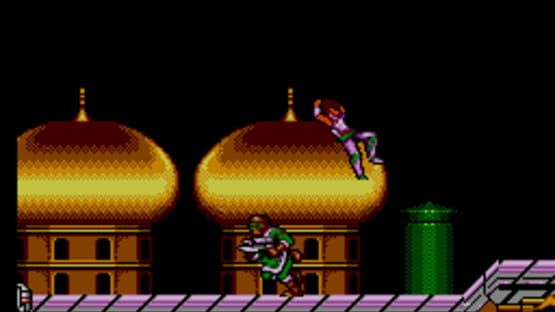
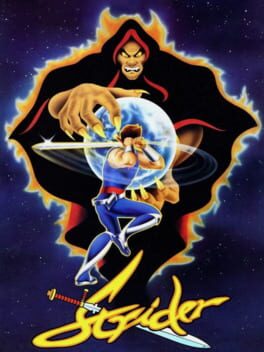
The controls of Strider consist of an eight-way joystick and two action buttons for attacking and jumping. The player controls Hiryu himself, whose main weapon is a tonfa-like plasma sword known as "Cypher". He can perform numerous acrobatic feats depending on the joystick/button combination used. Pressing the jump button while Hiryu is standing still will cause him to do a regular vertical jump, while pressing the jump button while pushing the joystick left or right will enable him to do a cartwheel jump. Hiryu can also slide under or through certain obstacles and enemies by first crouching down and then pressing the jump button. As well as his sliding move, both jumps can also be used to destroy weaker opponents. Hiryu is able to latch onto certain platforms, and climb across walls and ceilings using a metallic hook. While running down a sloped surface, Hiryu can gain enough momentum to allow him to do a longer cartwheel jump than usual. Numerous power-ups can be obtained from item boxes carried by certain enemies. These includes an extension to Hiryu's attack range that lasts for one hundred slashes, two types of health aids (represented by the kanji used to write Hiryu's name: 飛 and 飛竜), a max health extension (represented by the kanji 竜, the second character in Hiryu's name), an extra life, and a power-up that not only makes Hiryu invulnerable to attack but also increases his own attack abilities via shadow images of himself for 15 seconds.[3] Hiryu can also summon robotic companions known collectively as "options" that help him fight enemies. These consist of up to two mushroom-like droids, a saber-toothed tiger and a hawk, known individually as Option A, B and C respectively. The game has five stages: the Kazakh Soviet Socialist Republic (called "St. Petersburg" during the arcade game's attract sequence), the Siberian Wilderness, the Aerial Battleship Balrog (געלראב), the Amazonian Jungle, and the Grandmaster's lair itself, the Third Moon. Each of the stages is divided into a number of smaller sections, each with their own time limit and checkpoint location. The player has a three-point health gauge (which can be increased to five points with the health extensions. Hiryu will lose a life when either his health gauge is fully depleted, by moving him off the screen entirely (like falling into a bottomless pit) or when the game's timer reaches zero. It's Game Over when all of Hiryu's lives are lost, but the player can be given the opportunity to continue.
Releases
-
Wii
16 feb 2012
-
PlayStation
26 lug 2000
-
Commodore C64/128/MAX
31 dic 1989
-
Amiga
31 dic 1989
-
Amstrad CPC
31 dic 1989
-
ZX Spectrum
31 dic 1989
-
Sega Mega Drive/Genesis
31 dic 1991
-
Wii U
18 nov 2012
-
Arcade
01 mar 1989 Original
-
Atari ST/STE
31 dic 1989
-
Sega Master System/Mark III
31 dic 1991
-
Sharp X68000
27 nov 1992
Screenshots
Developed by
Published by
1989 — A year in gaming
Il catalogo di quell’anno, distinto dalla pagina editoriale su Generazioni.
Part of an era
Arcade & Origins
1972–1983
Related games
Stesso sviluppatore
1943: The Battle of Midway
1987 · Capcom
Commodore C64/128/MAX · Amiga · Amstrad CPC · ZX Spectrum · +2
Shooter · Arcade
Stesso sviluppatore
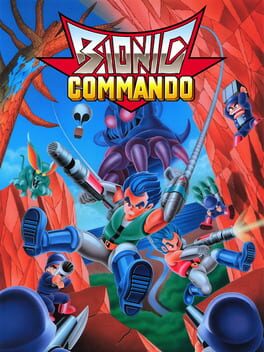
Bionic Commando
1987 · Capcom, Stephen Ruddy
Commodore C64/128/MAX · Amiga · Amstrad CPC · ZX Spectrum · +2
Shooter · Platform · Adventure
Stesso sviluppatore
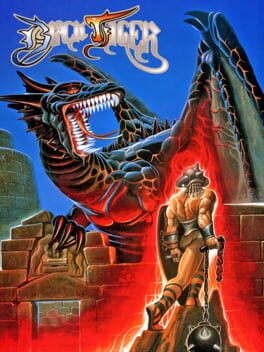
Black Tiger
1987 · Capcom
Wii · Commodore C64/128/MAX · Amiga · Amstrad CPC · +3
Shooter · Platform · Role-playing (RPG) · Arcade
Stesso sviluppatore
10 Little Robots
1983 · Computer Learning Center for Children
Commodore C64/128/MAX · Amiga · Atari ST/STE · Atari 8-bit · +2
Stessa era

Stessa era
10th Frame
1986 · Access Software
Commodore C64/128/MAX · Amstrad CPC · ZX Spectrum · MSX · +1
Sport
Stessa era

18 Wheeler: American Pro Trucker
1999 · Sega AM2
PlayStation 2 · Nintendo GameCube · Dreamcast · Arcade
Racing
Stessa era
Game data
- Original title
- Strider
- Developer
- Capcom
- Publisher
- Sega Enterprises, Ltd., U.S. Gold, Tec Toy, Capcom
- First release
- 01 marzo 1989
- Genres
- Platform · Arcade
- Era
- Arcade & Origins